How Missing Load Tickets Delay Invoicing and Strain Cash Flow in Local Hauling
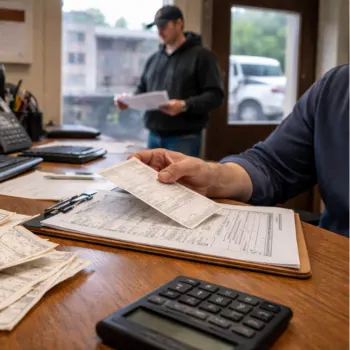
If you run a local hauling company, you know how much depends on one load ticket. A driver delivers material, gets a scale slip, and moves to the next job. That ticket is what allows the office to send an invoice.
When it goes missing, the invoice waits.
Missing load tickets are a common reason for delay invoicing in hauling operations. They lead to billing delays for hauling companies that rely on steady cash flow to cover payroll, fuel, and repairs. A few lost dump truck tickets each week can quietly slow down how fast money comes in.
In this article, you will see how missing load tickets delay invoicing, how that affects cash flow, and what changes when documentation moves faster from the truck to the office.
Missing Load Tickets Stop Revenue at the Source
The process starts at the office. A customer calls in a job. Trucks are scheduled. Drivers head to the plant, get loaded, deliver the material, and receive a scale ticket at pickup or drop-off. The driver finishes the load and moves to the next one.
At that point, the work is done. But revenue has not started yet.
The office still needs the load ticket to confirm what was hauled and how much. That document allows billing to begin. If the paperwork is delayed, so is the invoice.
- Ticket = proof of delivery
- No verified ticket = no invoice
- No invoice = no revenue
When missing load tickets enter this process, everything after delivery slows down. The load is complete, but until the documentation reaches the office, the money does not move.
How Missing Load Tickets Turn Into Billing Delays
The slowdown does not happen at delivery. It happens in the office.
After trucks finish their runs, paperwork has to be processed. This is where missing load tickets begin to create delay invoicing in hauling operations. The work may be complete, but billing depends on what can be verified on paper.
Manual Reconciliation Slows Everything Down
In many companies, tickets are collected at the end of the day or the end of the week. They are sorted by customer and matched against dispatch logs. Load counts are checked. Rates are confirmed. Then everything is entered into the system.
If a ticket is not there, the process stops.
Someone calls the driver. Someone searches through the truck. Sometimes the plant is contacted for a copy. All of this takes time. Instead of creating invoices, staff are tracking down paperwork. This is how billing delays for hauling companies start to feel normal.
Over time, these gaps create what many operations describe as back-office dispatch bottlenecks, where admin work piles up faster than it can be cleared.
One Missing Ticket Can Hold Up an Entire Invoice Batch
Most companies invoice by job or by customer. Loads are grouped together and billed at once. That works well when everything is complete.
It breaks down when one ticket is missing.
Even if nine loads are confirmed, the invoice may be held for the tenth. Rather than send a partial bill, the office waits. That wait pushes revenue out again. A few lost dump truck tickets each week can quietly extend the billing cycle without anyone noticing how much time has passed.
The Cash Flow Impact on Local Hauling Fleets
Cash flow depends on timing. Drivers are paid weekly. Fuel is purchased daily. Repairs happen when they are needed, not when invoices are paid. None of those expenses pause because paperwork is missing.
When missing load tickets delay invoicing, payment is pushed out. Slower invoicing leads to slower deposits. That gap may only be a few days at first, but repeated billing delays for hauling companies tighten working capital over time.
Money that should already be in the account is still sitting in a stack of unprocessed tickets. The work is complete, but the revenue has not been collected.
Why Paper-Based Ticketing Breaks at Scale
Paper works when volume is small. As load counts grow, cracks begin to show.
Common breakdown points include:
- Tickets left in trucks at the end of the shift
- Scale slips damaged by weather or grease
- Subcontractor paperwork turned in late or incomplete
- Drivers forgetting to drop off tickets
- Office staff misplacing stacks during busy weeks
Each of these creates lost dump truck tickets that slow billing.
There is also no real-time visibility. The office does not know a ticket is missing until it is time to invoice. By then, days have passed. Dispatch notes sit in one place. Tickets sit somewhere else. Billing happens in another system. The separation between dispatch and invoicing creates gaps where missing load tickets can go unnoticed. This is why many companies begin looking into paperless ticketing once paperwork starts affecting revenue timing.
How Real-Time Ticket Capture Shortens the Billing Cycle
The billing cycle moves faster when documentation moves faster.
Instead of waiting for paper to return to the office, tickets can be captured at the job site. In Dump Truck Dispatcher’s driver app, drivers receive their dispatches, complete the load, take a photo of the scale or load ticket, and upload it before leaving the site.
The image is stored inside the system and tied to that specific job. The office can access it immediately. There is no waiting for end-of-day drop-offs or end-of-week stacks of paperwork.
In integrated dispatching software, drivers can take a photo of the load ticket and upload it directly through their app. The documentation becomes visible to dispatch and billing right away, reducing the lag between delivery and invoicing.
When tickets are captured in real time, missing load tickets are identified sooner. Invoices can be created without chasing paperwork. The billing cycle shortens because the proof of delivery is already in the system.
Faster Documentation Means Stronger Cash Flow
When tickets are visible the same day, invoicing does not have to wait.
Same-day ticket visibility leads to faster invoicing. Faster invoicing leads to quicker payments. Less time chasing paperwork means more stable cash flow.
Missing load tickets delay invoicing. Delayed invoicing slows deposits. The link is simple.
Dump Truck Dispatcher helps close that gap by connecting dispatch, ticket uploads, and billing in one system. If you want to see how that works in your operation, schedule a demo and take a closer look.